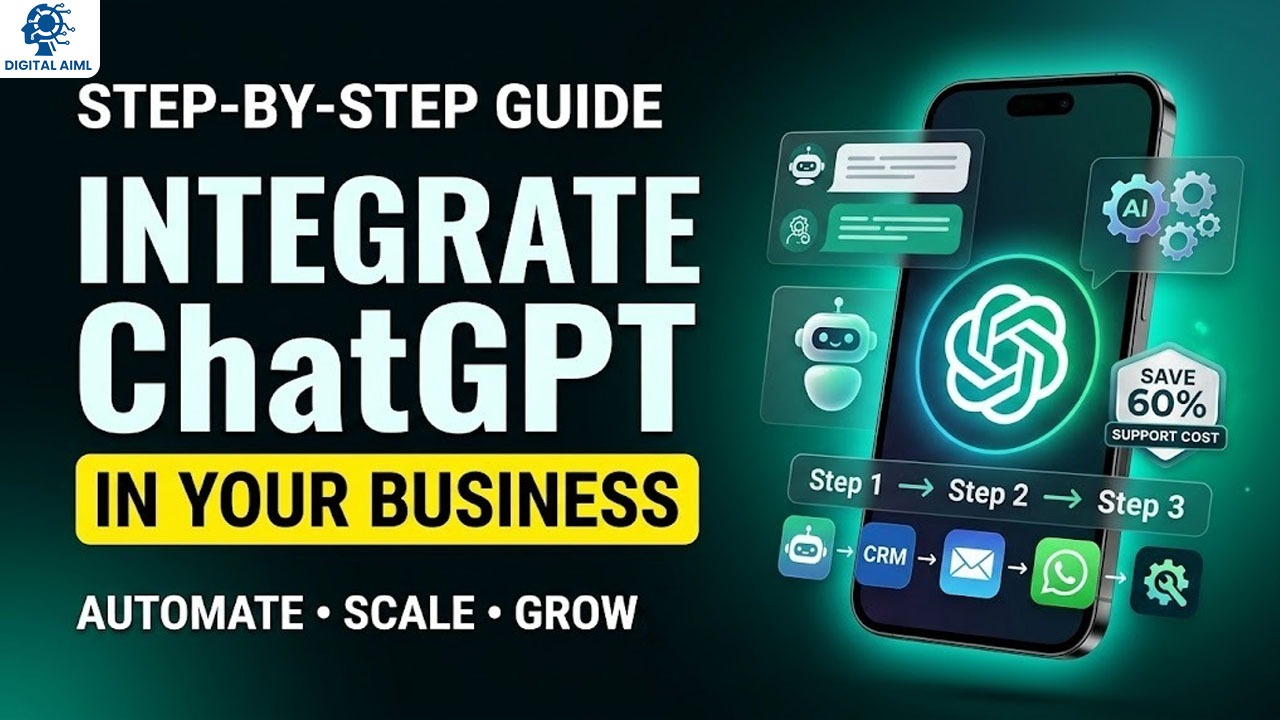
Introduction: AI-powered tools like ChatGPT are transforming the way businesses interact with customers, automate workflows and generate content. As companies across industries adopt conversational AI, integrating ChatGPT into your business processes can significantly boost productivity, customer experience and innovation.
This blog provides a clear, step-by-step guide to help you understand how to integrate ChatGPT into your business operations, whether you run a startup, enterprise, or digital-first brand.
Step 1: Identify Use Cases Relevant to Your Business
The first step is understanding where ChatGPT can add the most value. Popular use cases include:
- Customer support automation (chatbots on websites, apps and WhatsApp)
- Lead qualification and sales assistance
- Email and content generation (marketing, reports, blogs, etc.)
- Internal knowledge management (employee helpdesks, FAQs)
- HR automation (screening resumes, answering candidate queries)
Start small with one or two high-impact areas and expand as you measure ROI.
Step 2: Choose the Right Platform or API
You can access ChatGPT in various ways:
- OpenAI API: Best for custom app or backend integrations.
- ChatGPT plugins: Ideal for websites, e-commerce and small businesses.
- Third-party platforms: Tools like Zapier, Twilio, or WhatsApp Business API can help integrate ChatGPT into your ecosystem.
- Custom-trained models: For businesses with niche data and workflows.
Tip: Work with AI specialists like Digital AI ML to determine the right option based on your scale, data privacy needs and business goals.
Step 3: Design the User Interaction Flow
Define how users will interact with the chatbot or AI agent. Key components include:
- Welcome message and tone
- Question handling and fallback responses
- Escalation to human support when needed
- User feedback collection
Use natural, friendly language that reflects your brand identity. Ensure the chatbot is easy to understand and doesn’t frustrate users.
Step 4: Train the AI with Custom Data (Optional but Powerful)
While ChatGPT is powerful out-of-the-box, performance improves when trained with:
- Your company FAQs
- Product or service manuals
- Historical support chats or sales conversations
Training ChatGPT with this context allows it to respond more accurately and feel more aligned with your business.
Step 5: Integrate with Your Existing Tools
To fully automate tasks, ChatGPT can be integrated with CRMs, ticketing tools, email platforms and internal systems. Examples:
- CRM (like HubSpot or Salesforce) for lead logging and customer data
- Email systems for automated responses and follow-ups
- Slack or Teams for internal AI assistants
- E-commerce platforms for order updates and product recommendations
This step turns ChatGPT from a chatbot into a productivity powerhouse.
Step 6: Test, Monitor and Improve
Before going live, test the chatbot thoroughly:
- Simulate various user scenarios
- Test fallback logic and error handling
- Check for response quality and brand tone
Once live, monitor usage patterns and collect feedback to improve:
- Update the training data regularly
- Optimize flows based on real user behavior
- Fix gaps where AI fails or user intent is misunderstood
Step 7: Ensure Security and Compliance
When integrating ChatGPT, especially for handling customer data, ensure:
- Data encryption and storage compliance
- GDPR or local data privacy adherence
- User consent for data capture
Security should be baked into the design to protect both users and your brand.
Step 8: Scale Across Departments
Once successful in one department, ChatGPT can be rolled out in others:
- Marketing: Content generation, campaign ideas, ad copy
- Finance: Report summarization, invoice queries
- IT Support: Automated troubleshooting
- Legal: Document drafting and review assistance
The modular nature of ChatGPT makes it easy to adapt for different teams.
Benefits of ChatGPT Integration
- Reduce customer support load by up to 60%
- Generate content 5x faster
- Improve response time and engagement
- Enable 24/7 customer service with zero downtime
- Boost lead conversion with intelligent chat funnels
Conclusion
Integrating ChatGPT in your business isn’t just about staying up to date with technology - it’s about unlocking operational efficiency, improving customer experiences and enabling smarter decision-making.
Whether you're in e-commerce, fintech, healthcare, education, or any other industry, ChatGPT can be a powerful ally in your digital transformation journey.
Ready to Integrate ChatGPT? Let the experts at Digital AI ML help you plan, develop and deploy a tailor-made ChatGPT solution that drives real business value.
Want to integrate AI into your business?
Talk to our experts at Digital AI ML for a free consultation.
Frequently Asked Questions
Empowering Innovators Across Industries
Talk to our experts at Digital AIML for a free consultation.